Online Desk | Published: September 22, 2026
Hindus represent the second-largest religious community in Bangladesh. Over the past few decades, official census data has shown a steady decline in their overall proportion of the population.
At the same time, ongoing discussions around human rights and social stability have brought their security concerns into sharp focus—particularly during political transitions and localized conflicts. From historical records to current realities, this special report explores the demographic trends, historical factors, and living conditions of Bangladeshi Hindus.
Demographic Distribution and Regional Presence
According to the latest census conducted by the Bangladesh Bureau of Statistics (BBS), the Hindu population stands at approximately 13.13 million, representing 7.95% of the national total. Globally, Bangladesh is home to the third-largest Hindu population, following India and Nepal.
Hindus constitute the second-largest religious group in 61 out of the country’s 64 districts. The division-wise breakdown reflects their regional concentration:
Sylhet Division: 13.51% (1,491,315 people)
Rangpur Division: 12.98% (2,290,450 people)
Khulna Division: 11.54% (2,007,502 people)
Barishal Division: 8.24% (750,177 people)
Chattogram Division: 6.61% (2,196,947 people)
Dhaka Division: 6.26% (2,766,874 people)
Rajshahi Division: 5.70% (1,159,197 people)
Mymensingh Division: 3.92% (481,742 people)
Additionally, approximately 21% of the Bangladeshi diaspora identifies as Hindu.
A Century-Long Demographic Shift
Historical records and demographic analyses reveal a significant decline in the proportion of Hindus over the past century. In 1901, Hindus accounted for nearly 33% of the population in undivided East Bengal. By 2022, that figure had dropped below 8%.
Historians and demographers attribute this gradual decrease to three primary factors:
Partition and Migration: Political instability during the 1947 Partition of India and subsequent regional conflicts led many families to migrate across borders.
The 1971 Liberation War: During the 1971 war, minority communities suffered disproportionate violence, forcing millions—the majority of whom were Hindu—to seek refuge in India.
Socio-Economic Dynamics: Factors such as property disputes (historically linked to laws like the Vested Property Act), concerns over long-term security, and a slightly lower fertility rate compared to the national average have contributed to the demographic shift.
Recent Developments and International Coverage
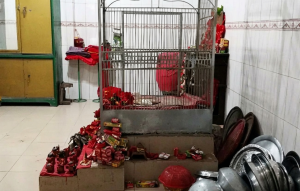
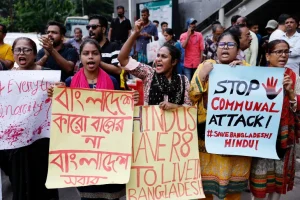
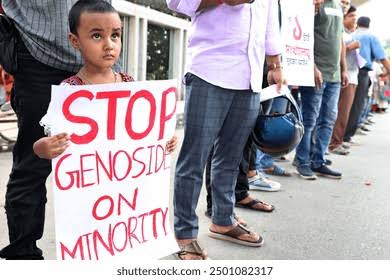
Following political shifts and intermittent law-and-order challenges, reports emerged of attacks targeting minority homes, businesses, and places of worship in various regions. International news outlets, including Reuters, BBC (via BBC Verify), and Al Jazeera, observed two main factors driving these incidents:
Political Fallout: Individuals associated with outgoing political factions often faced retaliation, with religious identities sometimes becoming an additional point of vulnerability.
Local Disputes and Opportunism: In moments of administrative disruption, opportunistic actors took advantage of the situation to seize property or intimidate local families.
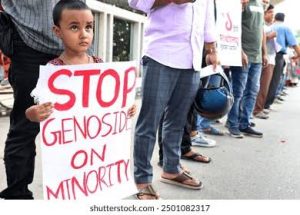
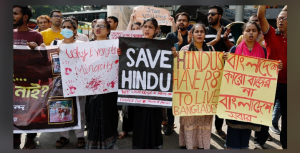
Human rights organizations, including Human Rights Watch (HRW) and Amnesty International, have urged authorities to conduct impartial investigations, ensure accountability, and protect the constitutional rights of all citizens.
Security Measures and Community Solidarity
To restore order, law enforcement agencies have initiated legal proceedings, filed cases, and arrested individuals linked to the violence. State authorities have also implemented targeted security arrangements around major religious festivals, such as Durga Puja.
Alongside these challenges, instances of civic solidarity emerged. In several communities, local residents, students, and neighborhood groups voluntarily stood guard outside temples at night to prevent vandalism and preserve communal harmony.
Long-Term Reforms and Strategic Demands
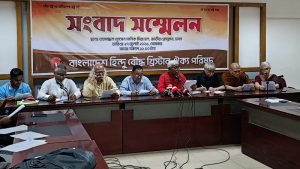
Representative organizations, such as the Bangladesh Hindu Buddhist Christian Unity Council, continue to advocate for structural protections rather than temporary security measures. Their primary recommendations include:
Enacting a comprehensive Minority Protection Act.
Establishing Fast-Track Tribunals to prosecute acts of violence.
Providing fair compensation and rehabilitation for affected families.
Setting up a dedicated Ministry of Minority Affairs.
Ensuring safety, equal rights, and protection against discrimination remains a central priority for fostering a peaceful and inclusive society for all citizens of Bangladesh.