DHAKA, Bangladesh — For Sukumar Pramanik, a high school teacher in the northern city of Rajshahi, Bangladesh’s upcoming national election on February 12 is more than a political milestone—it is a final test of his faith in the country’s democracy.
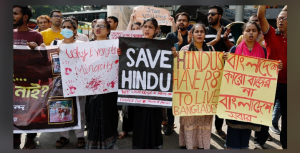
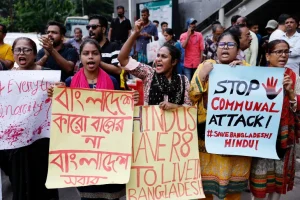
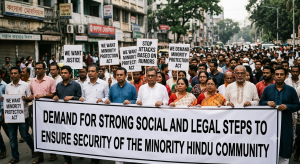
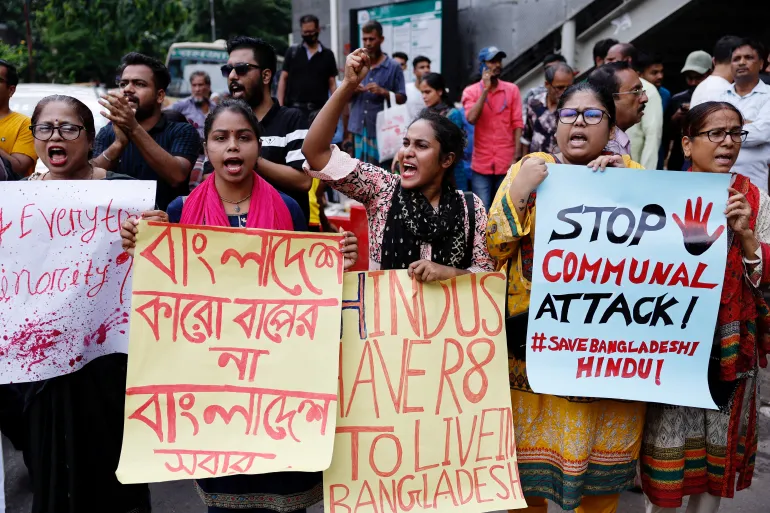
Electoral cycles in this South Asian nation of 170 million have historically been marred by political unrest, with religious minorities—primarily Hindus—frequently finding themselves caught in the crossfire. But since the tumultuous political transition of August 2024, which brought an end to former Prime Minister Sheikh Hasina’s 15-year rule, fear within minority communities has escalated to unprecedented levels.
“A mob from our own surrounding area attacked our neighborhood,” recalls Pramanik, recounting the violent aftermath of the 2024 uprising that left him hospitalized with a broken hand. “I stepped forward believing they knew me and wouldn’t cause harm. They broke my bones, but more than that, they shattered my trust.
I had never experienced anything like this before.”
A Pattern of Unrest and Impunity
Hindus constitute roughly 8 percent of Muslim-majority Bangladesh’s population, alongside smaller communities of Buddhists and Christians. Historically, minorities have often been viewed as a vulnerable voting bloc, targeted by rival political factions during times of transition to intimidate voters, seize property, or settle local grievances.
“If you look at our political history, persecution of minorities has never truly stopped—regardless of who was in power,” says Manindra Kumar Nath, acting general secretary of the Bangladesh Hindu Buddhist Christian Unity Council (BHBCUC).
“It happened before elections, and it happened after. What makes it worse is the complete absence of justice.”
The human toll remains a subject of intense debate:
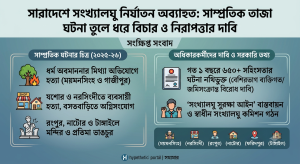
Monitoring Groups: According to the BHBCUC, at least 522 communal incidents were recorded in 2025 alone, resulting in 61 deaths. This followed more than 2,100 reported incidents during the chaotic power shift in August 2024.
Human Rights Advocates: Ain o Salish Kendra (ASK), a leading Bangladeshi human rights organization, documented a lower figure of 221 communal incidents in 2025, but noted that fear remains widespread.
Government Stance: Interim authorities dispute claims of systemic religious persecution. Official government data lists 645 total incidents involving minorities in 2025, maintaining that only 71 possessed genuine “communal motives,” with the remaining vast majority classified as ordinary criminal acts or local property disputes.
Scars of Trauma and Anxiety
Beyond the statistics lie deeply personal stories of psychological distress. In Bidyadharpur village, homemaker Shefali Sarkar remembers August 5, 2024—the day Hasina fled to India—as a nightmare that altered her life.
As mobs targeted homes associated with the outgoing regime, local men fled into hiding, leaving women behind to protect households.
“They vandalized our home while we cowered inside. I thought we were going to die,” Sarkar says. “The trauma was so severe that I required medical treatment for anxiety. With elections around the corner, that terror is coming back.”
Her husband, Narayan Sarkar, acknowledges that their immediate neighborhood has since calmed down, thanks in part to protection assurances from local Muslim neighbors. “The area is peaceful for now, but the fear lingers,” he says. “In times like these, peace can vanish in an instant.”
A Mixed Picture Across the Country
Not every region shares the same level of alarm. In Faridpur, located in central Bangladesh, local community leaders describe a strikingly different reality.
“We have maintained strong communal harmony here for decades,” says Shaymol Karmokar, secretary of a local festival committee. “Even during the peak of the 2024 unrest, our neighborhood remained completely peaceful. Political leaders from various parties have come to reassure us, and we intend to cast our votes freely.”
In an effort to rebuild public confidence and project inclusivity ahead of the vote:
The Bangladesh Nationalist Party (BNP), led by Tarique Rahman, has pledged to build a pluralistic society where every citizen feels secure regardless of faith.
Jamaat-e-Islami, the country’s main Islamist party, took the unprecedented step of nominating a Hindu candidate in the southern city of Khulna—a move aimed at softening its image and appealing to minority voters.
Yet, skepticism remains high. In districts like Gopalganj, where Hindus account for nearly a quarter of the electorate, independent candidates report pervasive anxiety that electoral competition could ignite localized violence. Minority leaders have also expressed frustration with the Election Commission, alleging a lack of direct dialogue regarding minority voter safety.
Government Assurances
Interim authorities led by Nobel laureate Muhammad Yunus insist that robust measures have been implemented to guarantee a peaceful election.
“Our top priority is ensuring that every citizen—majority and minority alike—can exercise their democratic right in a safe and festive environment,” said Shafiqul Alam, press secretary to the Chief Adviser. “For 15 years, citizens were denied genuine voting rights under a rigged system. We have consulted minority representatives and are fully committed to protecting their rights.”
For citizens like Sukumar Pramanik, however, promises carry little weight without tangible security on the ground.
“If our community comes under attack again during this vote,” Pramanik says softly, “it will be the very last time I put my faith in political promises.”