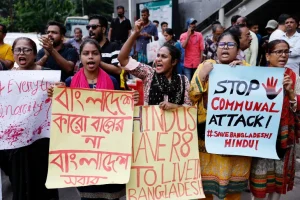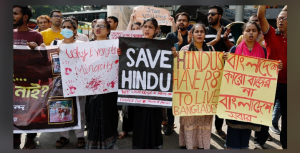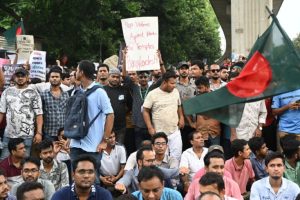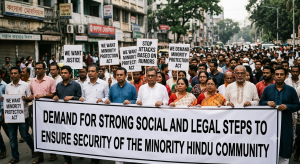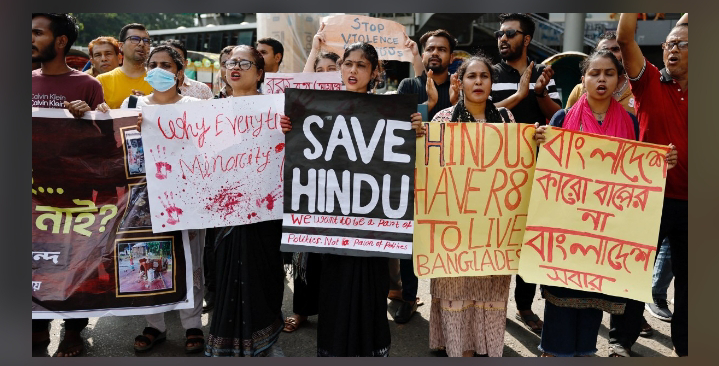
Two years after the political upheaval of August 2024, the security environment for Bangladesh’s religious and ethnic minorities has entered a subtle yet concerning new phase. While widespread, large-scale mob attacks have declined, local rights organizations and community leaders report a shift toward quieter, more localized forms of intimidation—leaving minority populations navigating a persistent atmosphere of insecurity.
The Changing Pattern of Violence: From Mobs to Targeted Threats
Human rights monitors note that the nature of persecution targeting minorities—primarily Hindus, as well as Buddhists, Christians, and indigenous groups—has evolved:
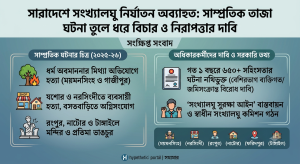
Sustained Localized Incidents: According to the Bangladesh Hindu Buddhist Christian Unity Council (BHBCUC), 257 incidents of sectarian violence were documented in the first six months of 2026, resulting in 44 deaths.
Targeted Operations: While mass vandalism has tapered off compared to late 2024, rights groups emphasize an uptick in “targeted persecution”. This includes land-grabbing targeting family property and places of worship, desecration of temples, localized extortion, and legal harassment involving blasphemy allegations.
Broader Documentation: A separate report by the Human Rights Congress for Bangladesh Minorities (HRCBM) documented over 500 incidents nationwide earlier in the year, pointing to persistent structural vulnerabilities across all eight divisions.
Official Stance: Distinguishing Crime from Communal Hostility
The interim administration maintains a firm stance against religious discrimination, emphasizing an evidence-based approach to law enforcement:
“Equal Citizenship”: Government spokespersons repeatedly stress that all citizens hold equal constitutional rights, asserting a zero-tolerance policy toward sectarian violence.
Law and Order Classification: Official reviews of police records argue that the overwhelming majority of incidents involving minority individuals stem from general criminal activities, political rivalries, personal enmities, or local property disputes—rather than systemic religious hostility.
Institutional Action: Law enforcement agencies point to increased police deployments around places of worship, faster emergency response times, and ongoing judicial investigations into reported offenses.
Grassroots Initiatives and Civic Solidarity
Despite lingering apprehensions, local communities across several districts have mobilized to preserve interfaith harmony:
Joint Neighborhood Patrols: Student groups, interfaith committees, and local volunteers have established neighborhood watch networks to guard temples and minority-owned businesses during sensitive periods.
Civic Peace Rallies: In regions like Faridpur and parts of Dhaka, interfaith dialogues and public rallies continue to foster dialogue, counter rumors, and discourage communal provocations.
The Path Ahead: Institutional Reform and Security
Human rights advocates stress that long-term stability requires moving beyond immediate law enforcement measures. Key demands raised by minority organizations include:
Enacting a Minority Protection Act to establish specialized legal safeguards.
Forming a National Minority Commission to independently investigate reported abuses.
Expediting Land Dispute Courts to resolve long-standing issues surrounding property rights and return unlawfully seized land to legitimate owners.
As Bangladesh navigates its broader political transition, bridging the gap between official security guarantees and the lived reality of vulnerable communities remains essential to ensuring lasting social cohesion.